You Service the Ute Every 10,000km. You Sharpen the Tools Every Week. When Did You Last Service the One Bit of Gear You Can't Replace?
Why so many blokes over 45 are wired at midnight, running on servo coffee by smoko, and blaming their age — when it's actually one thing nobody checks.

Dave Kowalski has serviced his ute like clockwork for twenty-two years.
Oil every 10,000. Tools sharpened Sunday arvo. Genny, compressor, the lot — all logged in a little book in the glovebox.
The one thing he's never once serviced? Himself.
Dave's 52. Runs his own electrical outfit in a regional town — just him, an apprentice, and a phone that never stops. And for about three years now, he's had the same problem every single night.
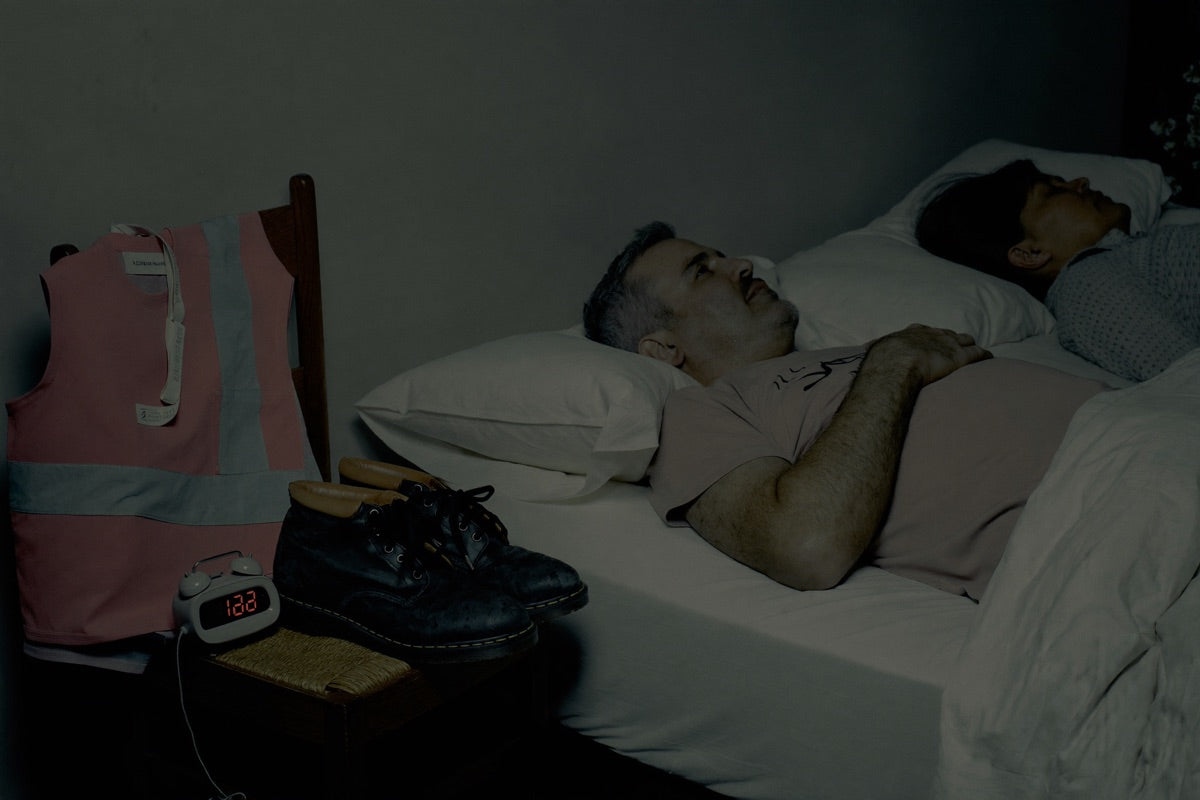
He gets into bed absolutely cooked — legs aching, back gone, eyes stinging. And then he just… lies there.
"Body's wrecked. But the head won't switch off. I'm running the next day's jobs, the quote I forgot to send, whether the apprentice is gonna show. It's midnight, then it's one, then I hear the birds."
He'd never call it stress. That's not a word blokes his age use.
"I'd just say I'm flat out. Bit run-down. She'll be right."
But it wasn't righting itself. By smoko he was flat as a tack, topping up on servo coffee just to get through the arvo. He'd snap at the apprentice over nothing. Reach for a word on the phone to a customer and it just… wouldn't come.
"The scary bit? I started wondering how many years I've got left on the tools. Because if the body goes, the business goes. There's no one else. It's just me."
He'd stand there some mornings, looking at the ute all serviced and gleaming, and think: the truck's in better nick than I am.
And he's not the only bloke in town thinking it.
Sound Familiar?
- Into bed buggered — then the body's wrecked but the head won't switch off
- Wide awake at 1, 2, 3am — running tomorrow's jobs on a loop
- Wired but knackered — too tired to work, too switched-on to sleep
- Flat by smoko, chasing servo coffee just to finish the day
- Short fuse — snapping at the apprentice, the missus, the dog
- Reaching for a word or a name and it's just not there
- Waking up feeling like you've already done a day's work
Ticked three?
Most blokes put each one down to something different — the back, the knees, the age, the grind. What if they all trace back to one system nobody's checked?
The Thing No One Puts on the Job Sheet
Dave did the right thing eventually — booked in with the GP. When he could get an appointment, which out his way is a two-to-three week wait.
Bloods came back fine. Heart fine. The lot — normal.
"Doc was a good bloke. But the answer was basically: you're 52, you work hard, try to slow down. Slow down. I've got a business to run and a mortgage. Slowing down's not on the list."
Here's the thing though — his doctor wasn't wrong, and he wasn't slack. A standard visit runs 15 minutes. There's no quick test on the job sheet for what was actually going on with Dave.
Because it wasn't a disease. It was a system running out of tune — one that'd been redlining for years.
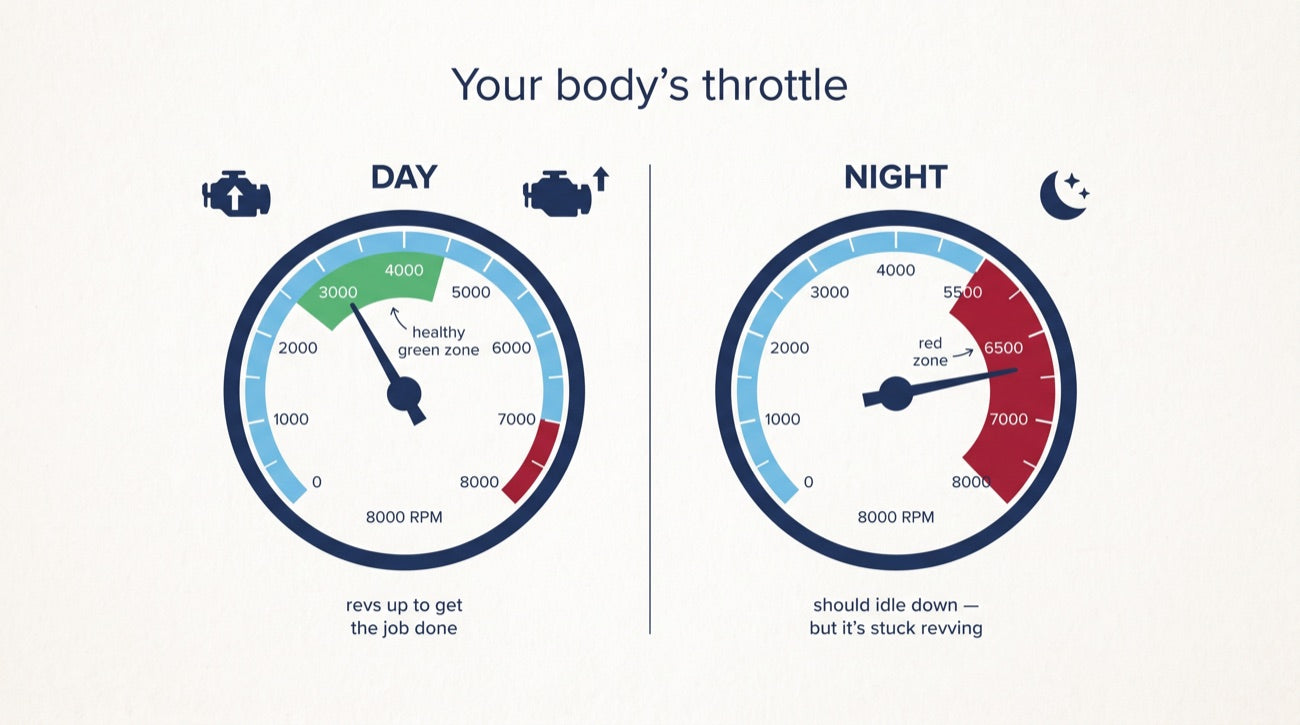
Your Body's Got an Accelerator. His Was Jammed Down.
Think of it like the throttle on the ute.
You've got a system in you — the sympathetic nervous system — that works exactly like a gas pedal (that's Harvard's own words, not ours). When there's a job to smash out, it floors it: adrenaline and cortisol pump in, the heart lifts, you get that surge to get it done. On the tools, that's handy. That's the bloke who gets the job finished.
But that pedal's meant to ease back off at night. Cortisol's supposed to be high of a morning to get you up, and drop away come night so the engine idles down and you sleep. That's the factory setting.
The trouble is the modern grind never lets off — the phone, the quotes, the early starts, the bills, the broken sleep. So the pedal stays jammed. Year after year, the engine never idles back down.
"When he finally explained it to me, it clicked," Dave says. "The midnight ceiling-stare. The 3pm flat spot. The short fuse. It wasn't seven different things. It was one thing — the engine never getting out of gear."
That's the wired-but-knackered. That's why you're parked in bed at midnight with the motor still running hot. It's not that you've gone soft. It's not just age. It's an accelerator that forgot how to idle down.
What Happens If You Just Keep Pushing Through
This doesn't fix itself. It compounds — same as any bit of gear you flog and never service.
Less sleep → shorter fuse → dodgier decisions on site → more coffee → less sleep. Round and round.
The people around you start reading the weather before they talk to you. (Dave: "The apprentice started going quiet when I walked in of a morning. That one stung.")
And slowly, the thing every self-employed bloke dreads creeps in: the maths on how many years the body's got left. Because when you're the business, a body that's running on empty isn't just tired — it's your livelihood on the line.
"I've seen blokes go off the tools early — back, ticker, just cooked. That's the road if you don't sort it. I didn't want that to be me at 58."
Why the Servo Coffee Never Worked
Dave's ute console tells the story. Might be the same as yours.
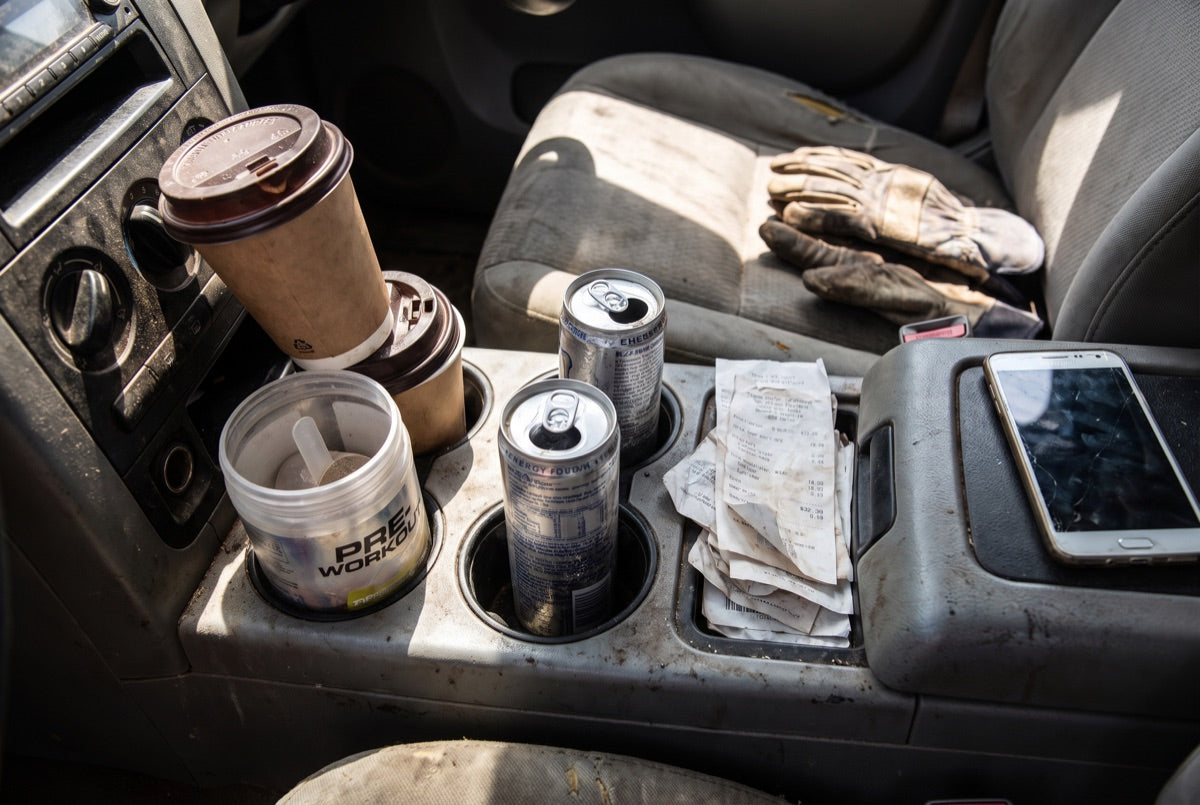
Servo coffees stacked in the cupholder. Energy drinks in the toolbox. A tub of pre-workout someone told him about. "Just push through" as the whole plan.
Some of it got him to knock-off. None of it held. And there's a reason.
Every one of those works on the symptom — the tiredness. A hit of caffeine to override it. A sugar spike to push through. Then the crash, and you're worse off than you started.
None of them touch the thing upstream — the accelerator that's stuck on, the reason the engine won't idle down at night in the first place.
As one bloke on site put it to Dave: "You can pour all the servo coffee you want in — it can't switch off an engine that's stuck revving."
It was never that Dave was slack, or getting old, or not tough enough. He was topping up the wrong tank.
The Bloke on Site Who Put Him Onto It
Wasn't a doctor. Wasn't some wellness thing on the internet.
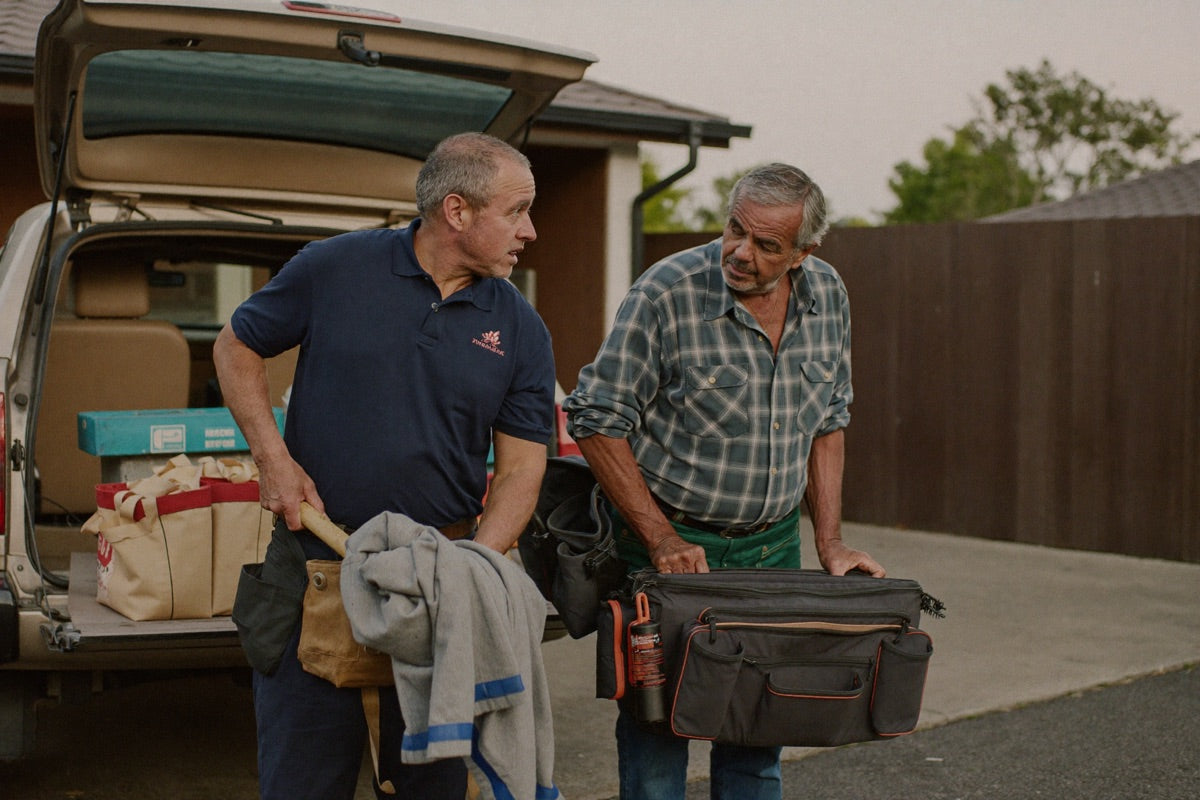
It was another self-employed sparky, a bit older, at a job Dave was subbing on. They were standing in the driveway packing up, and Dave made some crack about running on four hours' sleep and three coffees.
And the older bloke just said: "Mate. I was exactly you. Til I stopped treating the tiredness and started treating why the engine won't switch off."
He wasn't talking about sleep at all. He was talking about the stress response — and a few natural ingredients that help the body ease the pedal off. Not knock you out. Help it idle down on its own:

Two of the most-studied adaptogens going. Made to help your body handle stress and support a healthy cortisol rhythm.
For the wired-but-knackered.
The stuff your body burns through fastest when you're flogging it. Supports winding down after a long day.
For the midnight ceiling-stare.
The kind that doesn't spike and dump on you halfway up a ladder.
For the 3pm flat spot."I didn't need the science lecture," Dave says. "I needed something that made sense. Service the engine, not just pour more fuel in. That, I got."
The Formula That Services the Engine
It's called Neuravella Cortisol Reset® — Australian owned, 100% natural, built around ashwagandha, rhodiola, magnesium glycinate, L-theanine and B vitamins.

- Supports your natural stress response — the engine, not the symptom
- Supports winding down after a long day
- Supports steady, all-day energy — no spike, no dump
- No caffeine. Non-drowsy. One capsule.
No powders, no shakes, no faffing about. No script, no waiting room. It turns up in the post.
You service the ute. You sharpen the tools. This services the one bit of gear you can't replace: you.
"First week, honest? Not much. Nearly wrote it off."
"Week two I got into bed cooked like always — and next thing the alarm's going. Went, hang on. When did that last happen?"
"By week three I was sleeping through and getting up with something in the tank. Stopped reaching for the third coffee. Bit sharper on the quotes."
"The apprentice actually said, 'you right, Dave? You seem less cranky.' (laughs) That'll do me."

— Dave, 52 · dramatised account based on customer experiences · individual results may vary
SERVICE YOUR ENGINE — SHOP NOW →Free shipping · 90-day money-back guaranteeWhat Other Blokes Are Saying

"First time in years I've slept through and not needed three coffees to start. No caffeine in it either, which I liked."

"Body's still cooked after a big day but the head switches off now. That was the game-changer."

"3pm used to flatten me. Not anymore. Getting through the arvo without the crash."

"Wife reckons I'm less of a grump. High praise from her."
⚠️ Placeholder reviews — replace with real verified tradie reviews before spend (ACCC).
SERVICE YOUR ENGINE — SHOP NOW →Free shipping · 90-day money-back guaranteeWhat to Expect
Subtle. Adaptogens build, they don't hit like caffeine. Some blokes notice the edge come off first.
This is where it lands for most: switching off faster of a night, fewer 1am wake-ups, steadier through the arvo, longer fuse.
The engine settles into tune. Most blokes reorder here — not because they have to, but because they remember what running on empty felt like and they're not going back.
Two Roads
Another midnight staring at the ceiling, running tomorrow's jobs.
Another arvo flogging yourself on servo coffee.
Another year telling everyone you're fine.

You get into bed cooked, and you actually switch off. You wake up with something in the tank. You get through the arvo without the crash. And the maths on "how many years have I got left on the tools" gets a fair bit quieter.
The Call Dave Nearly Didn't Make
"I added it up once — the servo coffees, the energy drinks, the pre-workout tub. Easily a thousand bucks a year, and none of it lasted."
"This runs about ninety a bottle normally. I got it on the deal for around fifty, free postage, ninety-day guarantee. Ninety days — if it doesn't do anything, it's free. NOT giving it a run would've been the dumb move."
SERVICE YOUR ENGINE — SHOP NOW →Around $50 while the deal's live · free shipping · 90-day money-back guaranteeAn engine that's been redlining for years doesn't come good overnight. But it can be supported — a bit every day, like any service.
You're the gear you can't replace."
Fair Questions
Is there caffeine in it?
No. None. It's not a pick-me-up that hits and dumps — it supports your body winding down on its own. Nothing to crash off.
Will it make me drowsy on the job?
No. It's non-drowsy and non-habit-forming. It supports steady energy through the day and winding down at night — not knocking you out.
How fast?
Adaptogens build with daily use. Most blokes notice the edge come off in week one; the sleep changes usually land weeks 2–4. That's why the guarantee's 90 days, not 30.
How do I take it?
One capsule. That's it. No powders, no shakes.
What's in it?
Ten actives, 100% natural — ashwagandha, rhodiola, magnesium glycinate, L-theanine, B vitamins and more. Australian owned. No script.
What if it does nothing for me?
90-day money-back guarantee. Every cent back, no forms designed to make you give up. Read the label, follow the directions, and if you're on medication have a word to your doctor first.
1. AIHW — men less likely to access health services; higher chronic-condition rates outside major cities.
2. Harvard Health — Understanding the stress response (sympathetic nervous system = "gas pedal"; adrenaline + cortisol).
3. Cleveland Clinic — Cortisol daily rhythm (high AM, low at night); chronic elevation disrupts sleep.
4. American Psychological Association — chronic stress keeps the sympathetic nervous system firing ("wear-and-tear").
5. Chandrasekhar K. et al. (2012), Indian J Psychol Med — ashwagandha RCT in stressed adults.
6. Olsson E. et al. (2009), Planta Med — rhodiola in stress-related fatigue.
7. Nobre A. et al. (2008) — L-theanine and relaxation.
Studies referenced were conducted on individual ingredients, not the finished product.
*Results may vary. This is a dramatised account based on customer experiences. Always read the label and follow directions for use. If symptoms persist, talk to your health professional. Not intended to diagnose, treat, cure or prevent any disease.
THIS IS AN ADVERTORIAL AND NOT AN ACTUAL NEWS ARTICLE, BLOG, OR CONSUMER PROTECTION UPDATE. © 2026 neuravella. All rights reserved.